| TheWoodcrafter.net |
 Copyright © 2004. |
| My Basic Projects |
| The Retro Section |
| Jr. Woodcrafter |
| My Work |
| Detailed Plans |
| About |
| Lathe Work |
| Safety |
| Hints |
| Pic Gallery |
| Links |
| Search |
| Home |
| Birdhouses |
| Guest Book |
| Contact Us |
|
|
||||||||
|
Here is the original article from the
July - August 1956 Deltagram
ROCKWELL MANUFACTURING COMPANY - A DELTACRAFT PULICATION
 Photo #1 Here is a garden or patio furnishing that you will enjoy building. The sides are plywood, supported in back by with, surfaced wheels that will not dig into the law. The curved back has a contour for restful seating. For added comfort, a 2 inch thick pad can be used.
|
The wheels are made of three ¾ inch plywood stock glued together with waterproof glue. These are assembled to the chair as shown in the drawing. Note the ¼ inch tempered pressedwood washers on each side of the wheel. The ¼ inch hardwood dowels hold the wheels in place. The slats "G"' are beveled on the jointer (photo No, 4) and screw fastened to the sides with #6 x 1¾ brass flat head wood screws. Rosin coated 7 P common nails could be used instead of the screws. Be sure to drill pilot holes in the slats when using nails, use a 3/32 inch drill. Break all sharp carriers with garnet paper. Apply one or two costs of a wood preservative before applying out-side print. Paraffin applied to the axle on which the wheel turns and to the pressedwood washers will make the wheels turn more freely.
|
||||||||||||||||||||||||||||||||||||||||||
| BILL OF MATERIALS Garden Chair
|
|||||||||||||||||||||||||||||||||||||||||||
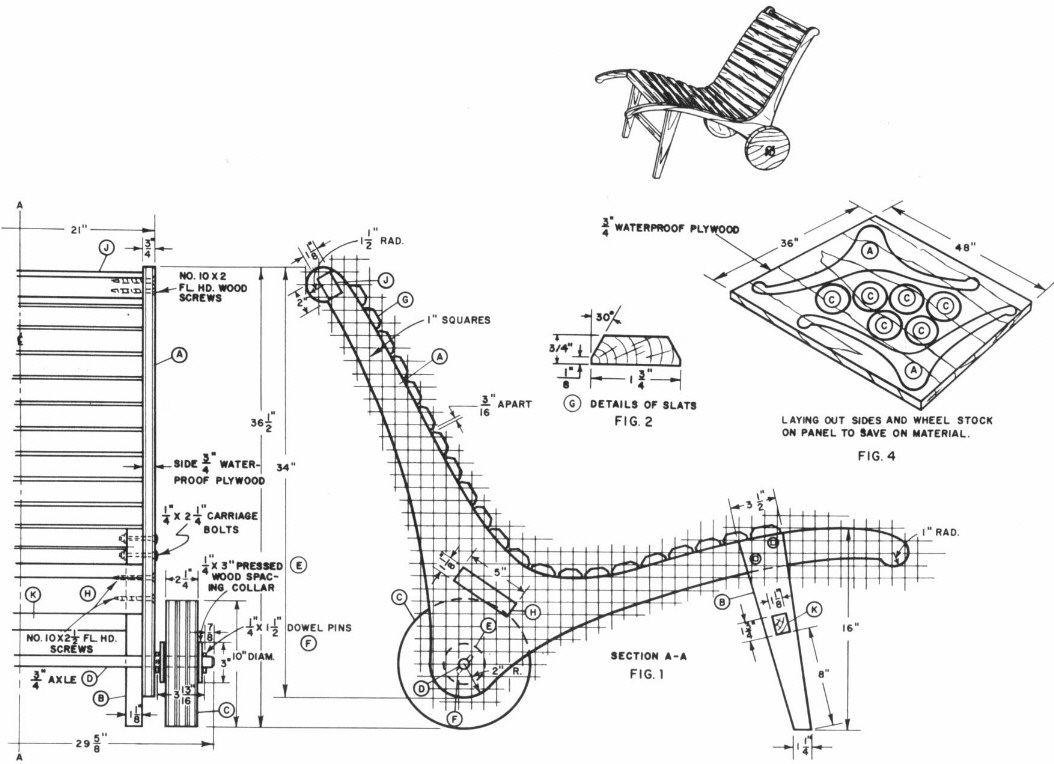 Drawing #1 |
|||||||||||||||||||||||||||||||||||||||||||
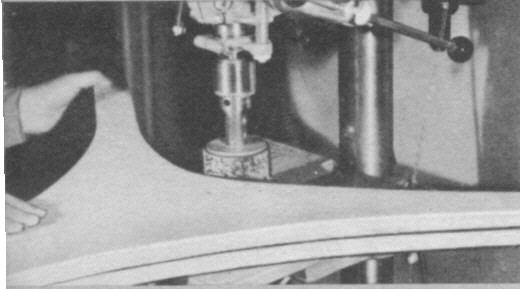
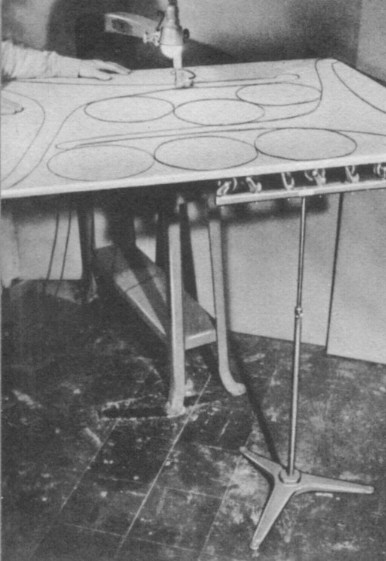
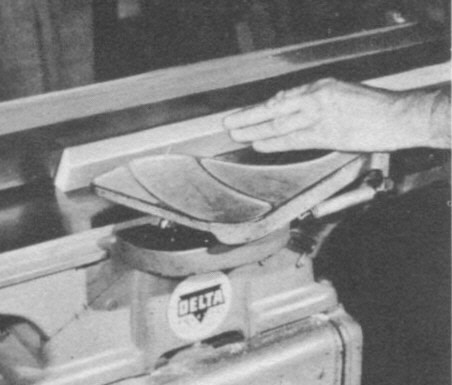
| Right-click here to download the drawing as an Adobe Acrobat (pdf) file. |
| * * * * Click on the drawings above to download a higher resolution picture. * * * * |
*********** WARNING***********
Read my page on safety before building this item.